Kudzu and Scum
Materials:
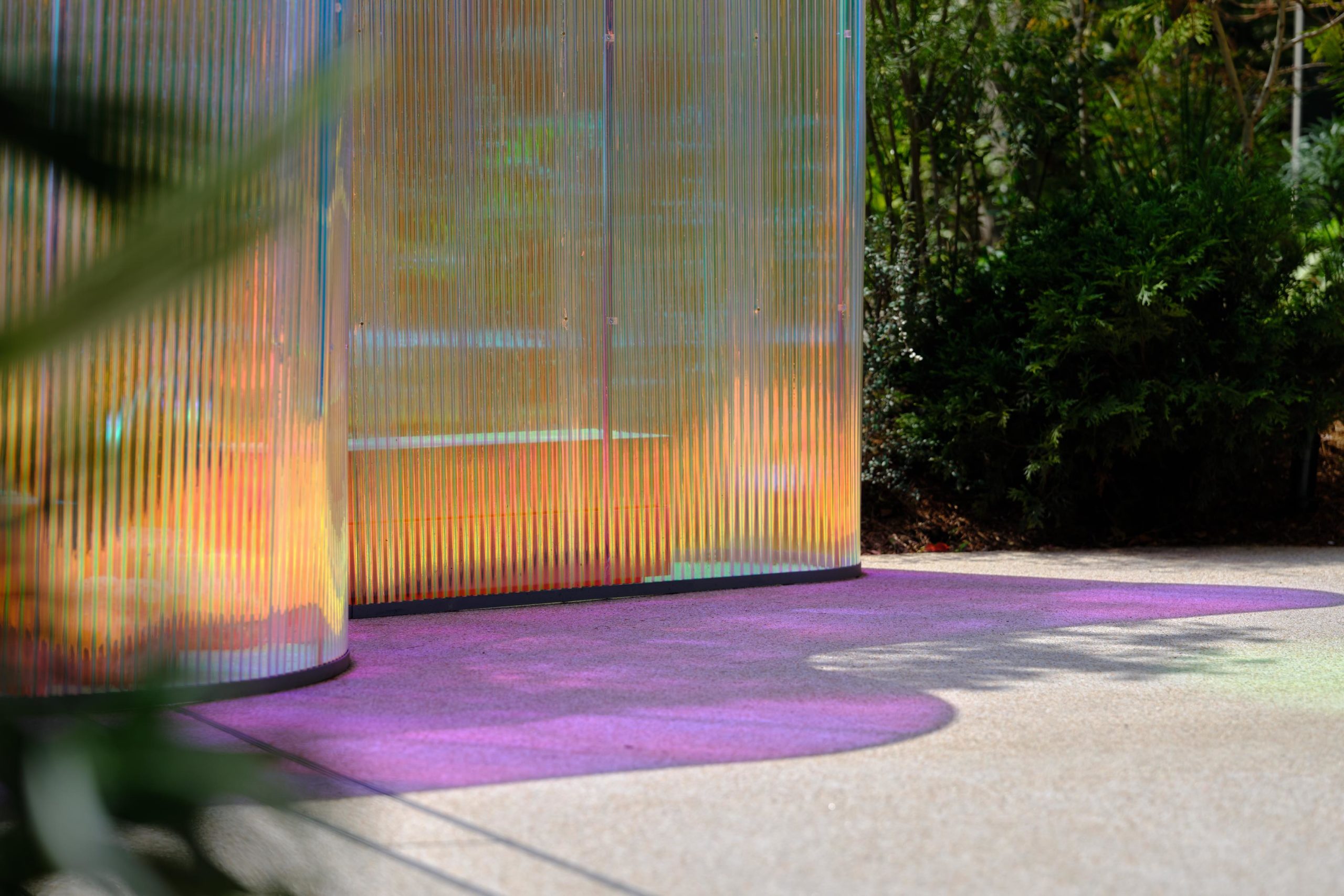
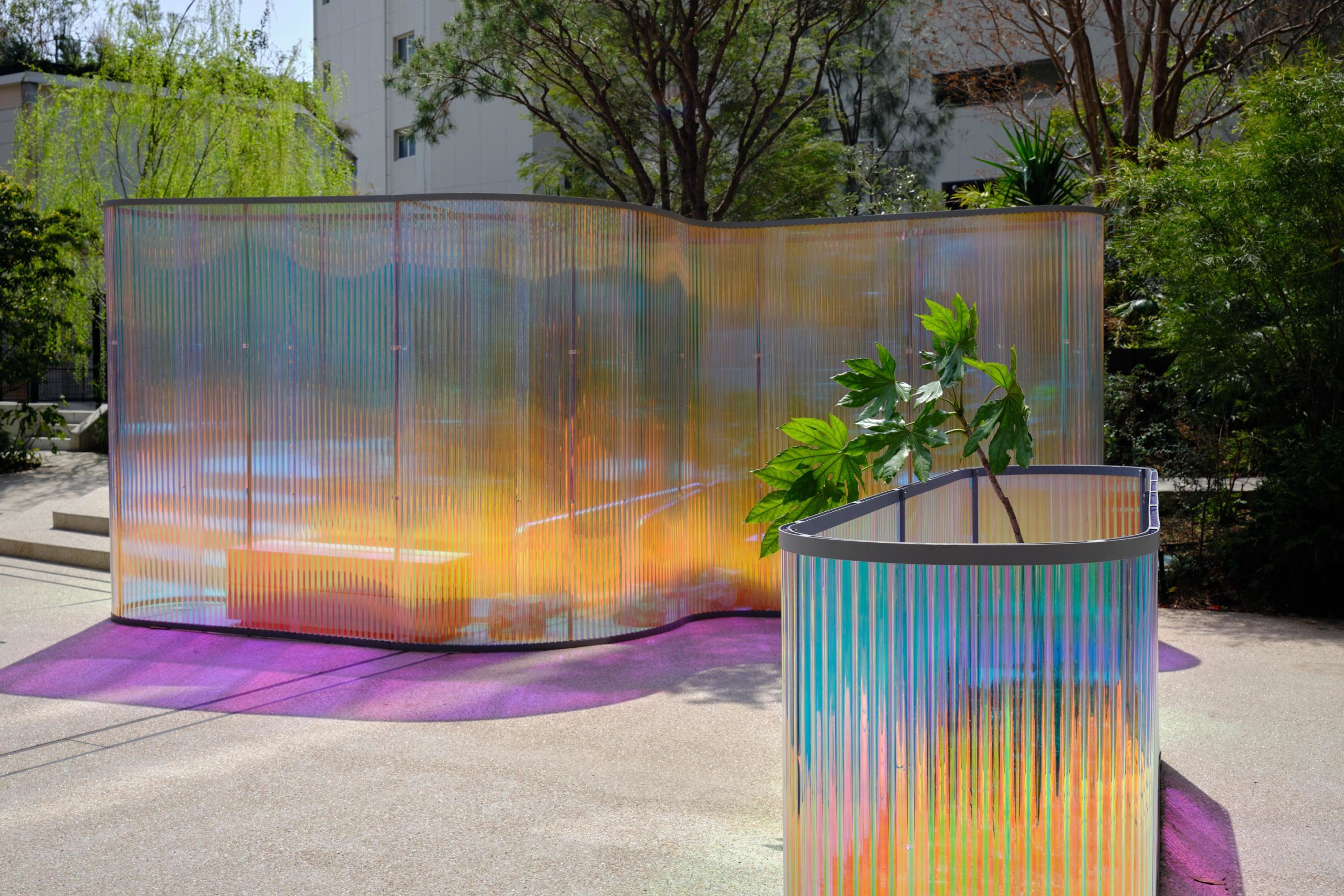
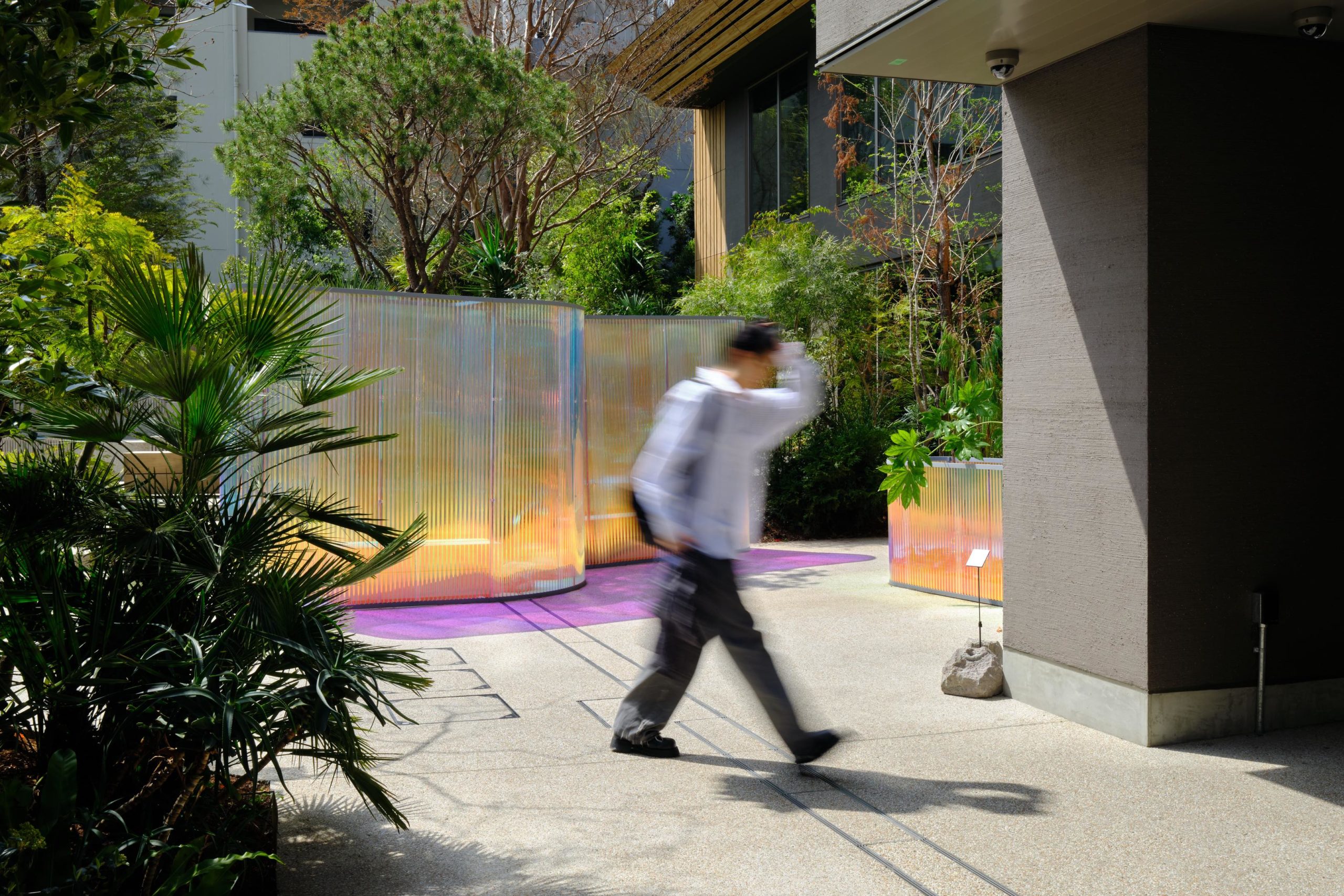
house #01: Wooden benches left behind, concrete molded to resemble stone, corrugated metal sheets, iron.
house #02: Winter strawberries (currently residing), barren strawberries (currently residing), Japanese knotweed (scheduled to arrive in April), Japanese parsley (scheduled to arrive in April), soil, humus, corrugated metal sheets, iron.
Description:
There are various theories, but according to data from the National Institute for Environmental Studies, the well-known clover/white clover was first introduced as packing material for pottery brought as a gift from the Netherlands in 1846. Subsequently, its companions arrived as pasture grasses, green manure, and for greening purposes, and now they peacefully thrive across the country as naturalized plants. Goldenrod, which produces yellow flowers in autumn, is believed to have arrived from North America in the 1900s as an ornamental and nectar plant. Due to its value as a nectar source, some say beekeepers actively spread its seeds during the 1940s, leading to explosive growth. Today, it is widespread across the country as a naturalized plant. However, possibly due to its release of allelopathic substances from roots and rhizomes, it has been designated a species of concern under the Alien Species Act and sometimes faces harsh public scrutiny. Kudzu, a native species of Japan, appears frequently in poems in the Manyoshu and has long been familiar to Japanese people. Its roots, stems, and leaves have been used in everyday life—for example, in kudzu starch, kudzu fabric, and the herbal medicine kakkonto. However, around the 1940s, as Japan was swept up in adopting the lifestyles of advanced Western countries, people became distanced from the plants they once lived alongside and utilized. Kudzu first visited America during the Philadelphia Centennial Exhibition in 1876. Later, it was invited to harsh environments abroad to help prevent soil erosion on slopes. By 1946, about 1.2 million hectares (roughly the size of 120 baseball stadiums) had been designated as its new habitat. But granting it land without continued care or understanding led to uncontrolled spread: it climbed trees, damaging the timber industry, and even telephone poles, cutting off power lines. Though once welcomed with subsidies, kudzu is now listed among the top 100 most invasive alien species in the U.S.
photo by Akihiro Itagaki (Nacasa & Partners)